

Who this guide is for. Serious users of consumer AI who do not code. APIs, coding tools and enterprise infrastructure are outside the scope.
The AI market moves increasingly faster than people can follow. Serious users need one dependable place to work and a simple way to test alternatives. To build that reliable workflow without missing out on true innovation, follow this simple framework:
Keep your current paid AI tool if it handles your important, recurring work well. Use a free account or a multi-model service when you have a real unmet need. Switch only when another tool performs meaningfully better across several of your own tasks.
Focus on the AI Tools That Improve Your Work
Model makers compete on intelligence, speed and cost, while their products differ in search, files, voice, projects and memory. For subscribers, the whole AI tool matters more than one score.
The previous AI Playbook article, How to Get More from Claude for Less, focused on maximizing the tool you already use. This guide explains when another tool is worth adding.
Enterprise token spending has caught finance leaders’ attention too, reinforcing that cost efficiency matters for organizations and individual users alike.1
Focus on value, not the lowest price. Ask whether a stronger model or another subscription adds enough value.
Start With How You Use AI
Choose a free account, one paid subscription or a multi-model service (sometimes called an AI aggregator or gateway), which offers models from several companies.
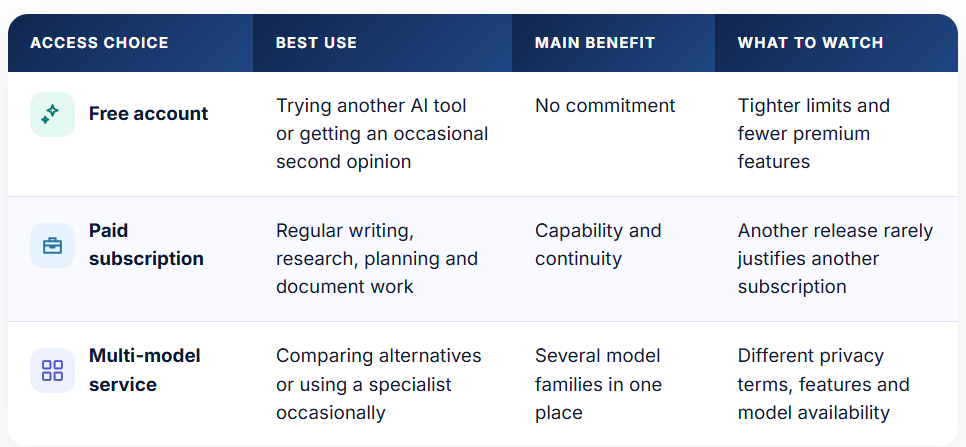
Compare the price you actually pay. Consumer access does not follow API pricing. Compare the model, limits and included features.
Choose the Usage Pattern Closest to Your Work
Frequency, repetition and the cost of a weak answer define the patterns below.2
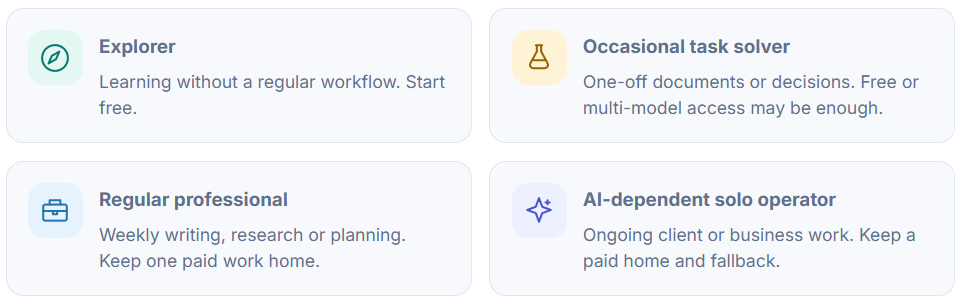
Patterns overlap. Paid users rarely benefit from moving projects and routines frequently.
Use Leaderboards to Build a Shortlist
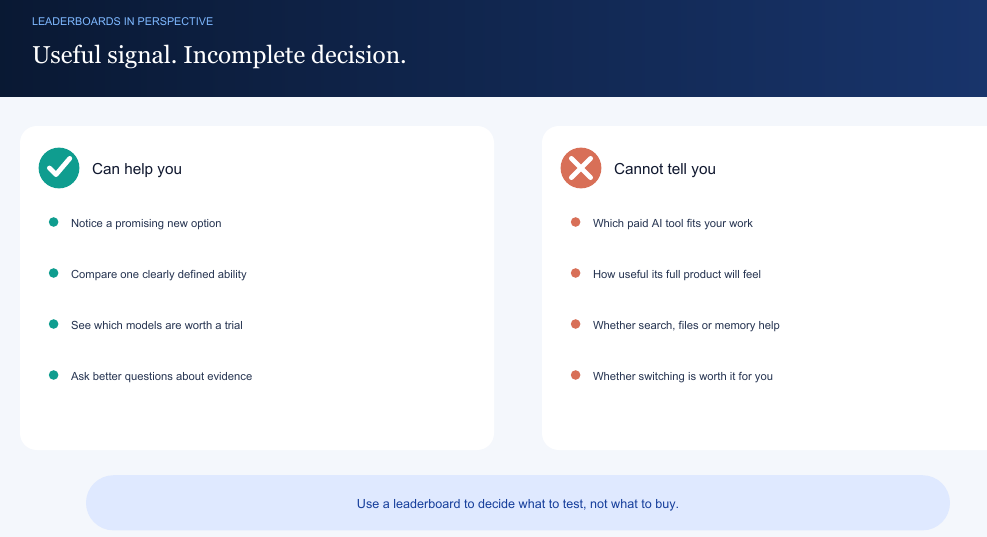
Leaderboards reveal candidates, not which subscription to buy. In the mid-July snapshot, Claude Fable 5 led the Artificial Analysis index and Arena Text, while Kimi K3 led Arena WebDev. The winner changed with the test.3, 4
Choose Whether to Stay, Supplement or Switch
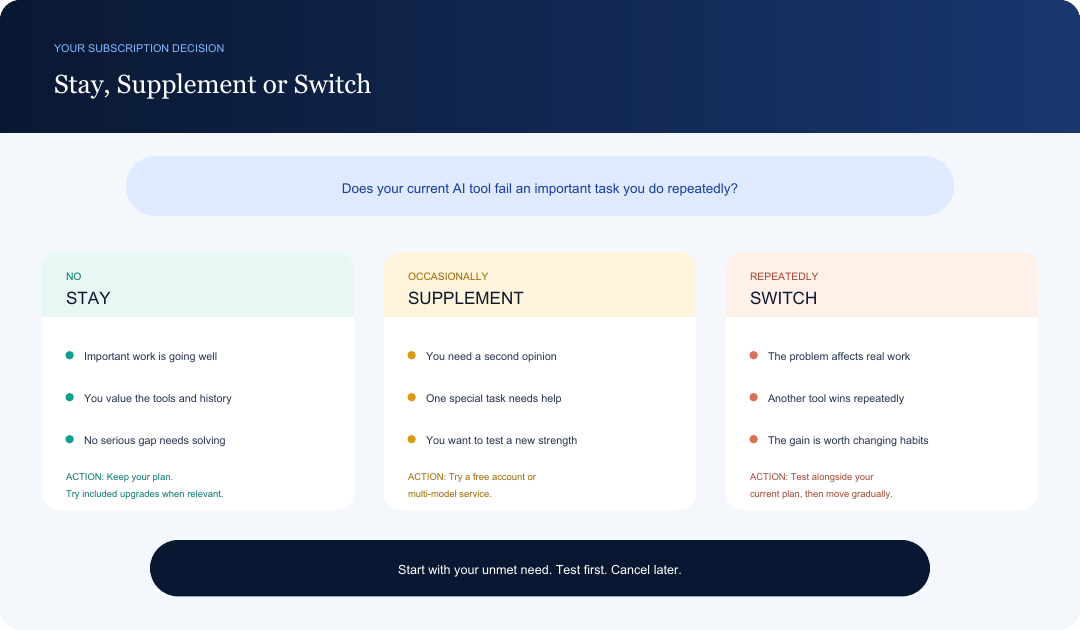
Stay when your current tool handles recurring work. Supplement for an occasional gap. Switch only when another tool wins repeatedly on important work.
Switching friction varies. Prompts and documents usually move easily. Projects, history, memory and connected services can take more effort, although Claude offers an experimental memory import.5
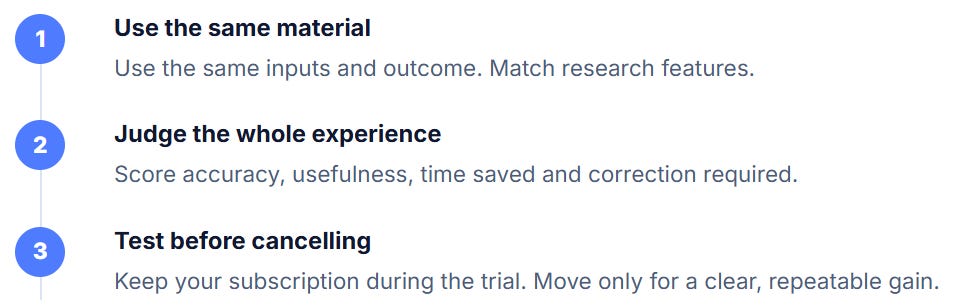
Test Alternatives on Your Own Work
Test five familiar tasks; real work beats a generic score.
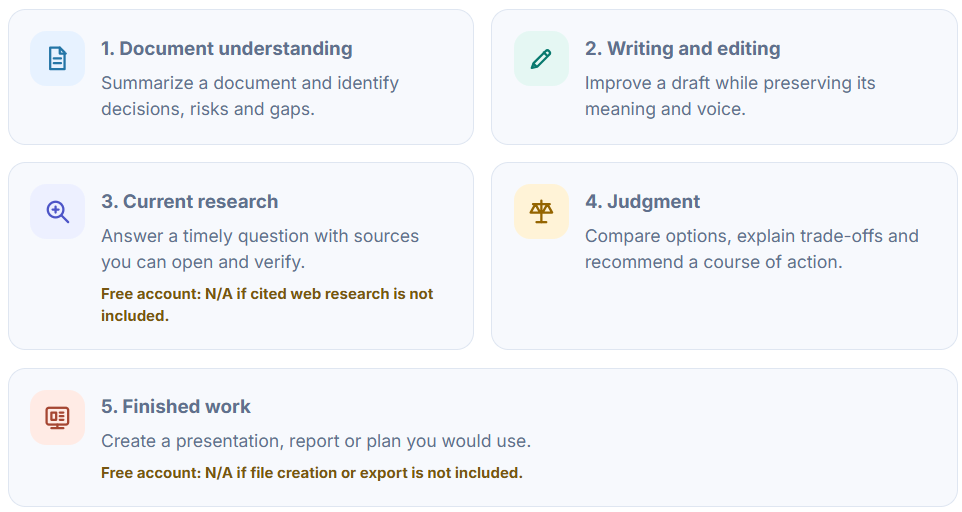
Mark unsupported free-tier tasks N/A. Use a one-month paid trial when research or finished files matter.
Match the Model to the Task
W. Mbelani’s visual model-routing guide inspired this rule: match AI effort to task importance.

Routine work favors speed and low-cost access. Consequential work justifies more time and a stronger model.
Choose from the row inside the AI tool you already pay for. Test cross-vendor candidates only when supplementing or switching.
ChatGPT labels show reasoning effort. Instant uses GPT-5.5; Medium through Extra High use GPT-5.6 Sol, and Pro uses Sol Pro on eligible plans.6
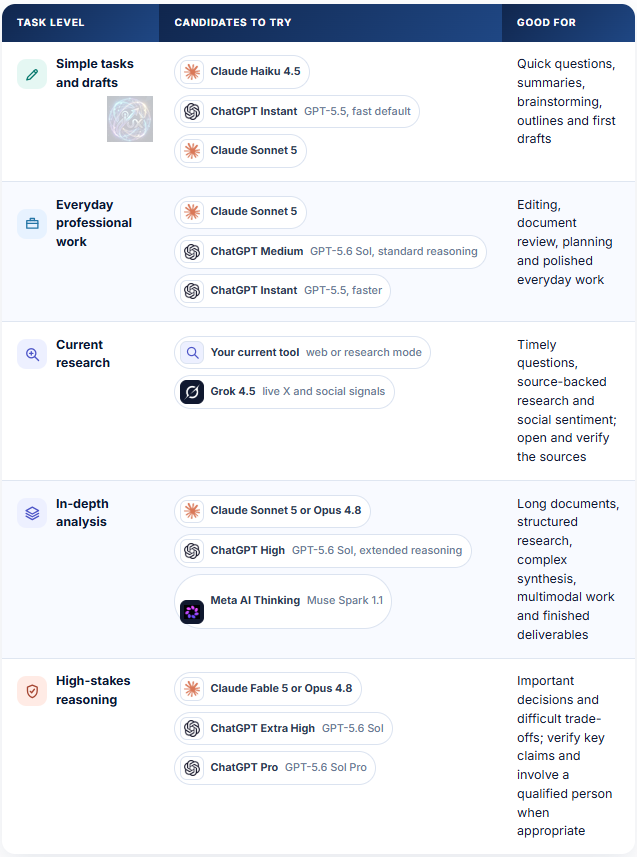
These editorial candidates were checked July 20, 2026.7 Availability varies, so check your own model picker.
Current research is its own lane. Grok searches X and the live web for breaking news and social signals; use your current tool’s cited research mode for broader sources and compare source quality.8
Download the full version of the AI Model Selection Playbook
Selective Attention Is the Durable Advantage
Keep one dependable AI tool and test alternatives only for a meaningful work advantage.
Method and scope. This guide excludes APIs, coding benchmarks and enterprise deployment. Claims were checked July 20, 2026; recommendations are candidates to test.
How to Get More From Claude for Less

You are an hour into real work, a sophisticated multi-step task that is finally coming together, when Claude stops. A yellow banner: you have hit your usage limit. If it is the five-hour session cap, you wait a few hours or pay to keep going. If it is the weekly cap, it is worse: you can be locked out until the new week begins, days away, with the task …
References
[1] Ramp. “Ramp Launches AI Token Spend Controls.” PR Newswire, July 16, 2026. prnewswire.com
[2] OpenAI. “How People Are Using ChatGPT.” OpenAI, September 15, 2025. openai.com
[3] Artificial Analysis. “Kimi K3 Achieves #3 in the Artificial Analysis Intelligence Index” and “Artificial Analysis Benchmarking Methodology.” Artificial Analysis, July 17, 2026 and accessed July 20, 2026. Intelligence Index result; methodology
[4] Arena. “Text Arena Overall” and “Code Arena: WebDev.” Arena, accessed July 20, 2026. Text Arena; WebDev
[5] Anthropic. “Import and Export Your Memory from Claude” and “Change the Model, Effort, and Thinking Settings.” Claude Help Center, accessed July 20, 2026. Memory import; model and effort settings
[6] OpenAI. “GPT-5.6 in ChatGPT.” OpenAI Help Center, accessed July 20, 2026. help.openai.com
[7] Meta. “Introducing Muse Spark 1.1.” Meta AI, July 9, 2026. ai.meta.com
[8] xAI and X. “Grok” and “About Grok.” xAI and X Help Center, accessed July 20, 2026. Grok search; About Grok; pricing