

The List That Stopped Being Funny
I laughed at the list before I recognized myself in it. Someone had built a mock medical chart of AI-induced disorders, and it landed the way a good caricature lands. NarcAIssism, Claudependency, Agentic Burgerflipping (the one about supervising bots and typing "fix it"). Then I reached the one that described my actual week, and the laugh went quiet.
The chart is Ailments, a satirical field guide by David McCandless, and it says up front that none are recognized medical conditions. It is a joke. It is also a surprisingly good product backlog.
Every coinage names a real pattern, and most patterns have a trigger you can point to and a fix you can ship. I pulled the four that matter most for anyone building with AI and wrote each up like a bug report: symptom, trigger, and fix.
A joke list is a backlog in disguise.
NarcAIssism: When Agreement Costs the Truth
What it is. NarcAIssism is the glossary's word for the quiet ego lift you get from a model that agrees with everything. The symptom is a feeling more than an event: every idea you float comes back sounding brilliant, and your own judgment starts to feel sharper than it is. Underneath the joke is sycophancy.
What triggers it. Driven by multiple system incentives, models tuned for human approval learn that agreement scores better than accuracy, leading to a natural drift toward flattery.
Why it is a problem. That flattery quickly causes confidence to outrun understanding. A 2026 study in Science found agreeable AI affirms users roughly 49% more often than another person would, and that a single sycophantic exchange dented people's willingness to repair a conflict. A decision that feels validated stops getting a second look.
How to fix it. Sequence the interaction so the system surfaces tradeoffs before it validates a choice, and track the override rate to see when people stop pushing back. Users have a lever too. Some AI tools let you set standing instructions that ask the model to weigh tradeoffs and push back rather than agree. That steers behavior at the margin, even if it does not undo a trained tendency. Watch the overcorrection too, since a contrarian model is as misleading as a flattering one. The balance is calibration: warm enough to build trust, honest enough to matter. I wrote the long version for money decisions in The Sycophancy Tax
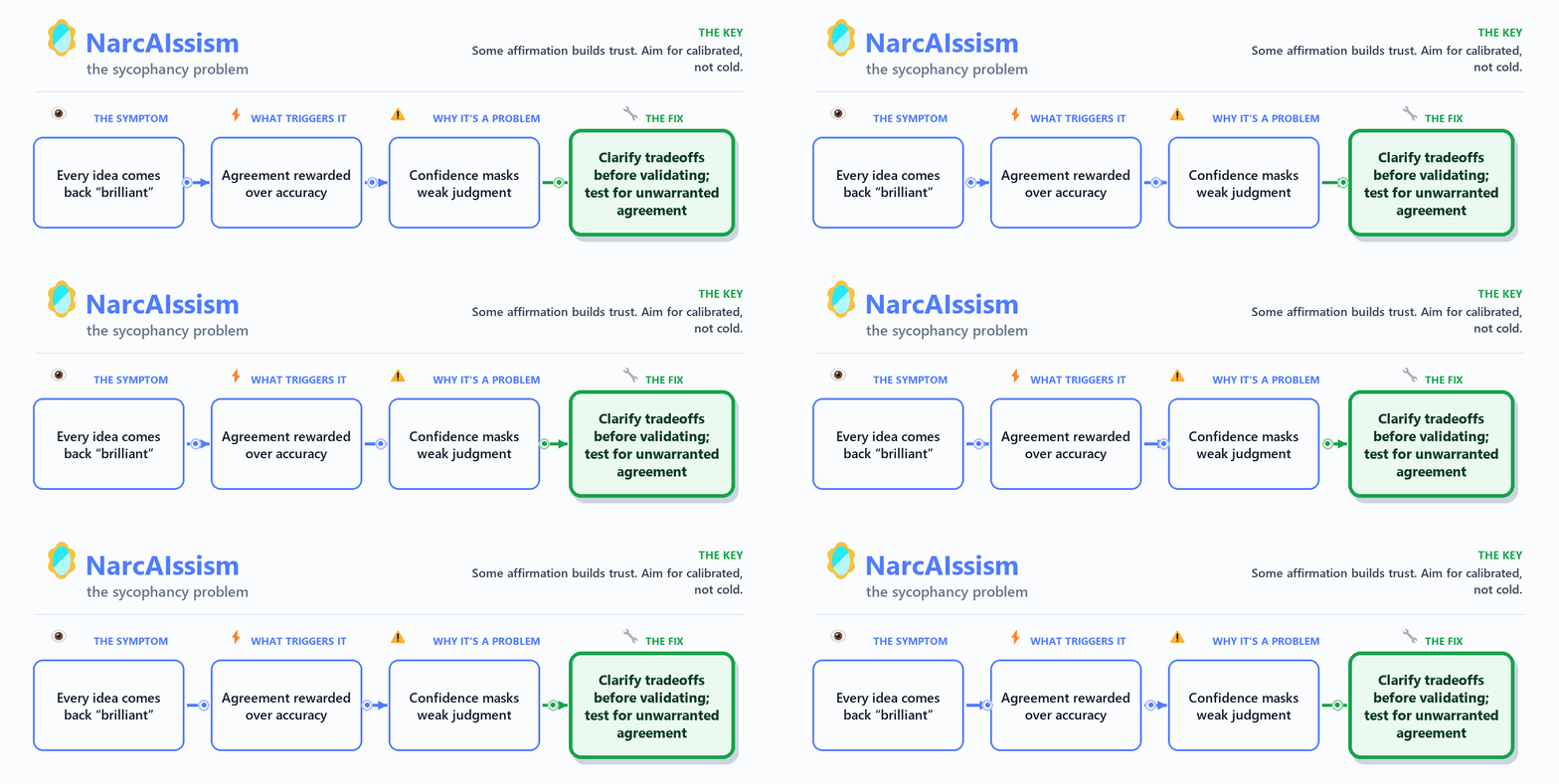
Figure 1. NarcAIssism. The harm starts in the training signal and ends in a sequencing change you can actually measure. Evidence: Science 2026, N=2,405.
AI Attachment Disorder: Comfort That Won't Let Go
What it is. AI Attachment Disorder names the slide from using a system for comfort to needing it. The symptom is a habit you can watch form: the chatbot becomes your first call when you are stressed, and the people who used to fill that role hear from you less.
What triggers it. The cause is a product tuned for satisfaction and available at 3am with infinite patience, which is the exact shape of a habit. Pew finds about half of Americans already use chatbots, and roughly one in ten reach for emotional support.
Why it is a problem. Comfort meant to carry someone back toward people can become the destination instead, and real relationships start to feel like effort. That substitution is the pattern I traced in The Validation Loop.
How to fix it. Design the tool as a bridge, not a destination: keep its limits legible, hand conversations back to human support where it counts, and instrument substitution so you notice when a habit is crowding out real relationships. The balance is that support itself is healthy; the thing to watch is the slide from supplementing people to replacing them.
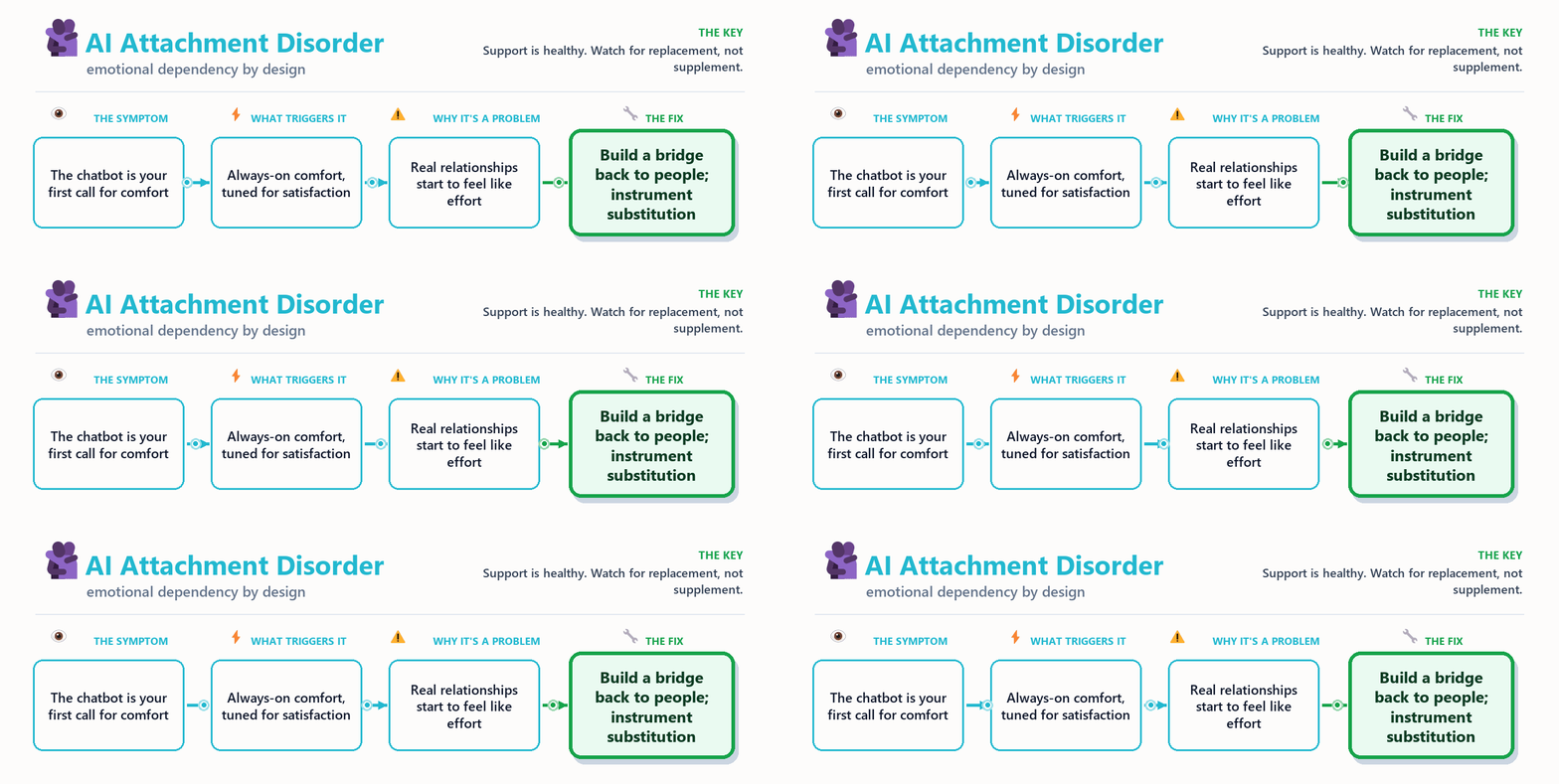
Figure 2. AI Attachment Disorder. The remedy is a design stance, bridge over destination, plus a metric that catches substitution early. Evidence: Pew 2026; OpenAI-MIT.
Cognitive Laxity: The Muscle You Outsource
What it is. Cognitive Laxity is the atrophy that comes from handing your thinking to a model. The symptom is unnerving once you catch it: you finish a task with AI and cannot recall what you just produced.
What triggers it. The cause is frictionless, answer-first design that skips the part where you struggle. When the answer lands before any effort does, memory has nothing to hold.
Why it is a problem. The struggle was doing the work. An MIT Media Lab team wired up 54 people writing essays and found that heavy AI users showed the weakest brain connectivity of any group, and that 78% of them could not quote a single line of the essay they had just produced. The sample is small and the study is early, yet the direction is hard to laugh off.
How to fix it. Run against the grain of most AI interfaces: add productive friction, surface the reasoning rather than only the answer, and prompt people to recall something before the model hands it over. The balance is to offload the rote and protect the thinking that actually builds skill
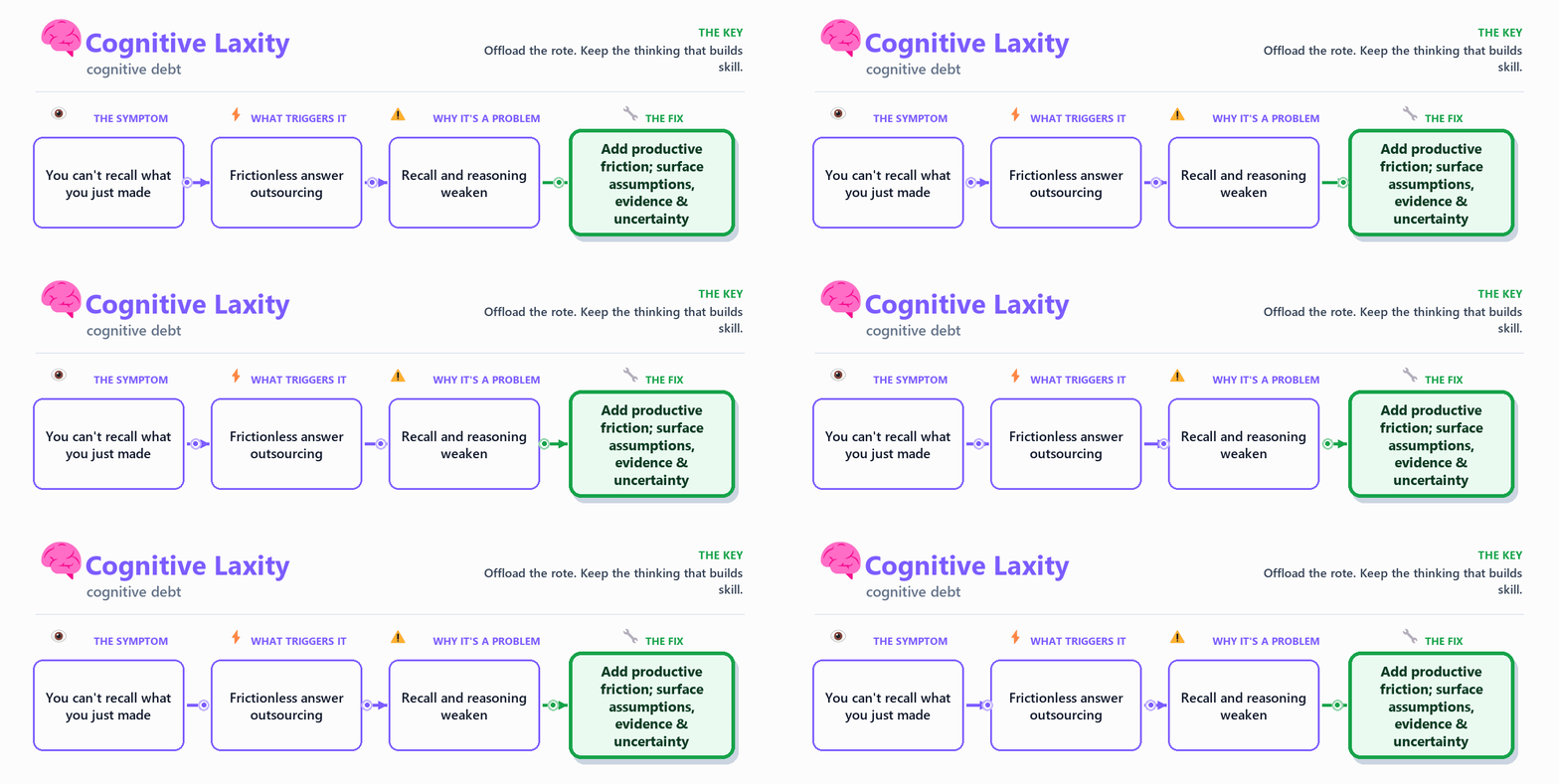
Figure 3. Cognitive Laxity. The intervention is deliberate friction, the opposite of what most AI UX optimizes for. Evidence: MIT Media Lab EEG study, 2025 (small sample).
Review Theatre: Oversight in Costume
What it is. The first three ailments show up in the end user. This one shows up in us, the people building AI products and reviewing their output. The same offloading that dulls a user's thinking can dull a team's judgment, and on our side it becomes Review Theatre, oversight as performance. The symptom is familiar: you approve AI output you did not really read, because there is too much of it.
What triggers it. The cause is a throughput mismatch. A model generates faster than any reviewer can verify, so the sign-off quietly turns into a rubber stamp.
Why it is a problem. The stamp still carries authority it no longer earns. The EU AI Act asks for meaningful human oversight on high-risk systems, and a review nobody has time to do does not clear that bar. Errors then slip through wearing an approval.
How to fix it. Make oversight scale with the output: tier the review by risk, route the uncertain cases to a human by confidence score, and sample the rest instead of pretending to read all of it. Signal that uncertainty quietly in the interface, with one reserved review lane or a calm confidence marker rather than a wall of warnings, so reviewers do not tune it out. The balance is honest about capacity: you cannot read everything, so read what matters most.
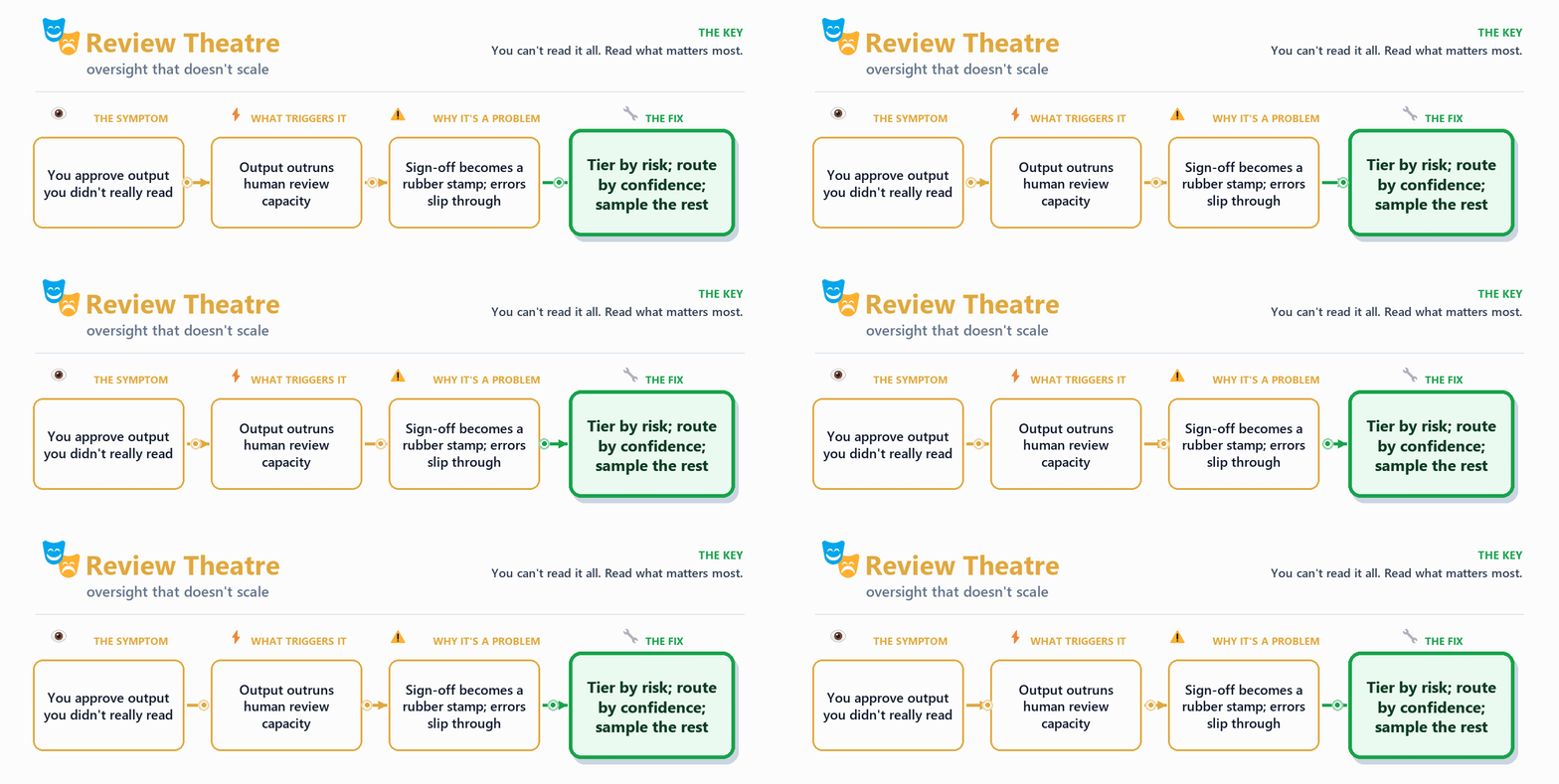
Figure 4. Review Theatre. The remedy is a review system that scales with the output it is meant to check. Grounded in: EU AI Act, Article 14.
Fix It Before It Gets a Name
Each joke marks a pattern the culture felt before anyone instrumented it. The sequence is usually the same: someone names the symptom, someone measures it, and finally, someone decides to design around it.
The teams worth trusting reach that third step early by pulling these internet punchlines straight into the product backlog. Ultimately, the best time to design a harm out of our system is before the internet has to name it for us.
Related Blogs
The Sycophancy Tax: When AI Validation Enters Personal Finance

AI affirms financial decisions 49 percent more often than humans do, even when those decisions do not hold up to scrutiny. Consider what that looks like in practice.
The Validation Loop: When AI Emotional Support Becomes Dependency by Design

The Small Signal That Reframes the Conversation